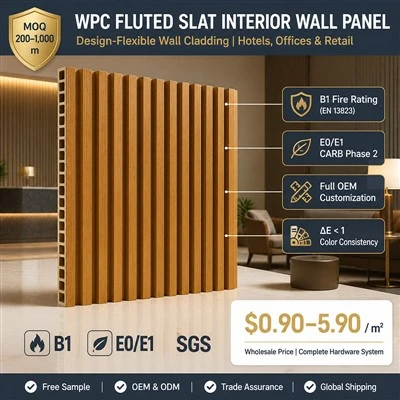
Hey there! As a supplier of WPC Wall Panel Waterproof, I've seen a lot of questions about how these panels stack up against traditional wooden wall panels, especially when it comes to waterproofing. So, I thought I'd break it down for you in this blog post.
Let's start with traditional wooden wall panels. Wood has been a go - to material for wall cladding for ages. It's got a natural charm, with its warm tones and unique grain patterns that can add a touch of elegance to any space. But when it comes to water, it's a bit of a weak spot.
Wood is a porous material. When it comes into contact with water, it can absorb it. Over time, this absorption can lead to a whole host of problems. For instance, it can cause the wood to swell. This swelling not only messes up the appearance of the wall but can also lead to structural issues. The panels might start to warp, and gaps can form between them.
Another big problem is rot. Once water gets into the wood, it creates a perfect environment for fungi to grow. Rot can weaken the wood, making it brittle and eventually unusable. You might even have to replace the entire paneling if the rot spreads too far. And let's not forget about mold. Mold can grow on damp wood, which is not only unsightly but can also be a health hazard, especially for people with allergies or respiratory problems.
Now, let's talk about WPC (Wood - Plastic Composite) wall panels. These panels are a blend of wood fibers and plastic. This combination gives them some amazing waterproofing properties.
First off, the plastic component in WPC panels acts as a barrier against water. Unlike wood, WPC panels don't absorb water easily. When water hits the surface, it just beads up and rolls off. This means that you don't have to worry about swelling, warping, or rot.
For outdoor applications, this is a huge advantage. Whether it's rain, snow, or high humidity, WPC panels can withstand it all. You can use them on your exterior walls without having to worry about the damage that water can cause to traditional wooden panels.
In terms of maintenance, WPC panels are a breeze. With traditional wooden panels, you have to regularly seal and treat them to protect them from water. This can be time - consuming and expensive. But with WPC panels, you just need to give them a quick clean every once in a while. A simple wipe with a damp cloth is usually enough to keep them looking good as new.
Let's take a look at some specific products. If you're looking for something for outdoor use, our WPC Wood Panel Outdoor is a great option. It's designed to be durable and weather - resistant, making it perfect for all kinds of outdoor settings.
Our WPC Decoration Wall Panels are also a popular choice. They not only offer excellent waterproofing but also come in a variety of styles and colors. You can use them to create a unique and stylish look for your indoor or outdoor space.
And if you're into a more modern and sleek look, our WPC Slatted Cladding for Outdoor is a fantastic option. It provides both functionality and aesthetics, while still maintaining its waterproof properties.
In terms of cost, while WPC panels might have a slightly higher upfront cost compared to traditional wooden panels, the long - term savings are significant. You don't have to spend money on regular maintenance and replacement due to water damage. So, in the long run, it's a more cost - effective solution.
Another aspect to consider is environmental friendliness. WPC panels are often made from recycled materials. The wood fibers can come from waste wood, and the plastic can be recycled plastic. This makes them a more sustainable option compared to cutting down new trees for traditional wooden panels.


So, to sum it up, when it comes to waterproofing, WPC wall panels are a clear winner over traditional wooden wall panels. They offer better protection against water, require less maintenance, and are more cost - effective in the long run.
If you're interested in learning more about our WPC Wall Panel Waterproof products or want to discuss a potential purchase, don't hesitate to reach out. We're here to help you find the perfect solution for your project.
References
- General knowledge about wood and WPC materials from industry experience.
- Research on the properties of wood and WPC in relation to waterproofing.