Architectural facades are changing. For years, the exterior of a building was judged mainly by its appearance and initial cost. Today, architects, developers, contractors, and building-material distributors are looking at a much wider set of factors: durability, maintenance, installation efficiency, material weight, energy performance, and long-term value.
This shift is changing the way exterior wall systems are designed and sourced. Sustainable facade materials are no longer limited to a particular type of "green" product. In practice, a better facade is one that performs reliably over its service life while reducing unnecessary material use, maintenance, replacement, and installation costs.
For commercial projects, residential developments, hotels, retail buildings, and renovation work, this means material selection is becoming a more important part of the overall project strategy.
What Makes a Facade Material Sustainable?
There is no single material that is automatically the most sustainable choice for every building.
A practical assessment should consider the complete service life of a facade. How long will the material last? How often does it need maintenance? Is it suitable for the local climate? How much does it weigh? Can it be transported and installed efficiently? What happens when the building is renovated?
Durability is particularly important for exterior applications. A facade that requires frequent replacement can create additional material consumption and labor costs, even if the original product has a low environmental impact.
This is why modern facade specifications increasingly focus on performance rather than appearance alone. Weather resistance, moisture protection, UV stability, fire performance where required, and installation method all need to be considered together.
What Are the Best Materials for Modern Exterior Wall Cladding?
The right choice depends on the building, climate, design requirements, and project budget.
WPC wall cladding is often considered when a project needs a wood-inspired appearance combined with easier maintenance than traditional timber. It can be used for exterior walls, terraces, commercial buildings, and other architectural applications where visual consistency and weather resistance are important.
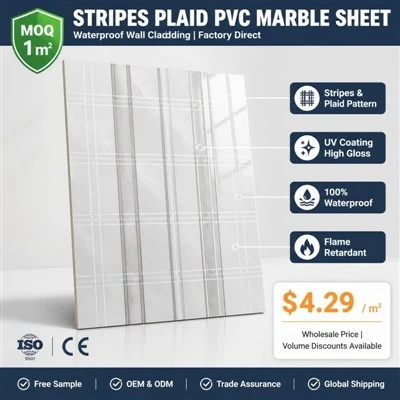
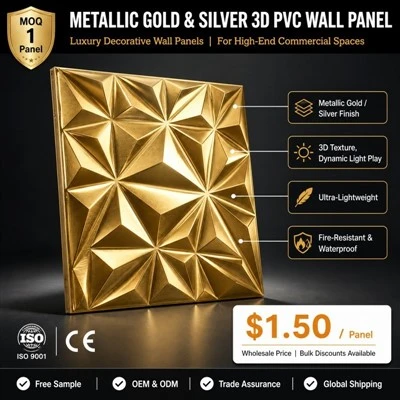
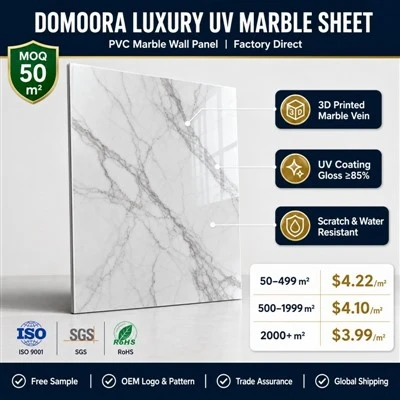
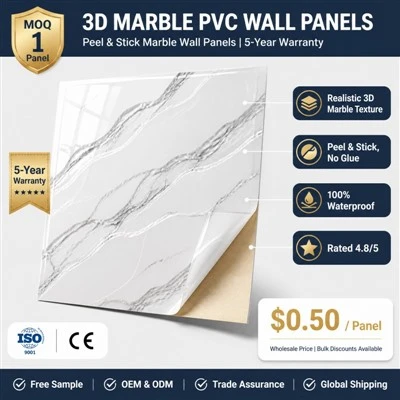
PVC and composite wall panels offer another practical option, particularly for projects that require decorative finishes, moisture resistance, and relatively straightforward installation. Marble-look and textured surfaces can create a high-end appearance without relying on heavy natural materials.
For projects where a stone appearance is required, PU stone panels and flexible ceramic tiles provide lightweight alternatives to conventional stone. Their lower weight can simplify handling, transportation, and installation, which can be especially useful for renovation projects and applications where structural loading is a concern.
The key is not to select a material simply because it is described as sustainable. The better approach is to match the material's actual performance with the project's requirements.
Why Are Lightweight Facade Panels Becoming More Popular?
Weight has a direct effect on logistics and installation.
Heavy facade materials may require additional handling equipment, stronger supporting structures, and more labor on site. Lightweight panels can make transportation and installation easier, particularly for international projects or buildings undergoing renovation.
This is one reason lightweight decorative stone panels and composite wall systems are gaining attention in commercial construction. They can provide the desired visual effect while making the installation process less demanding.
For B2B buyers, however, the product itself is only part of the equation. Panel dimensions, thickness, packaging, container loading, fixing method, substrate requirements, and installation accessories should all be checked before placing a large order.
How Do You Choose Facade Cladding for a Commercial Project?
A good specification normally starts with the project rather than the product catalogue.
Before choosing exterior wall panels, buyers should consider:
Climate: Will the facade face strong sunlight, heavy rain, humidity, freezing temperatures, or coastal conditions?
Building type: Residential, hospitality, retail, office, and public projects may have different requirements.
Installation: Does the project need a concealed fixing system, clips, screws, battens, or mounting keels?
Maintenance: How much cleaning and periodic maintenance can the building owner reasonably accept?
Appearance: Is the project looking for a wood, marble, stone, fluted, textured, or contemporary finish?
Supply: Can the manufacturer maintain consistent color, dimensions, and quality across repeat orders?
Customization: Are custom sizes, colors, surface finishes, or moulds required?
Technical support: Can the supplier recommend compatible accessories and installation methods?
For distributors and contractors, these questions are often more important than simply comparing the price per square meter.
Are Facade Accessories Really That Important?
They are easy to overlook, but a facade is a system rather than a collection of individual panels.
Mounting keels, battens, fixing clips, screws, brackets, edge profiles, and joint cover strips all affect the final installation. An unsuitable fixing component can create problems even when the wall panel itself meets the project specification.
For example, joint cover strips can help protect panel edges, cover visible seams, and allow appropriate space for movement caused by changes in temperature and humidity. Matching the accessory to the panel thickness and installation method is therefore an important part of project planning.
For international B2B procurement, sourcing panels and compatible accessories from the same supplier can also simplify communication, specification, packaging, and after-sales support.
What Is Driving the Future of Architectural Facades?
The facade market is moving toward more practical and performance-focused solutions.
Architects want greater design freedom. Contractors want faster installation. Developers want predictable project costs and lower maintenance requirements. Distributors need products that can be supplied consistently and adapted to different markets.
This is creating demand for systems that combine appearance, performance, and installation efficiency.
At the same time, sustainability is becoming a lifecycle issue rather than a marketing label. Long service life, efficient transportation, reduced maintenance, responsible material selection, and the possibility of replacement or renovation all have a role in the final environmental impact of a building.
For manufacturers, this means product development is no longer only about creating a new surface finish. It is also about improving the complete building-material solution.
From Wall Panels to Complete Facade Solutions
At Hangzhou Feihuang Industry Co., Ltd., we manufacture and supply building-material solutions across four main categories: Wall Cladding & Panels, Flooring, Decorative Stone & Facade, and Accessories & Fixings.
Our product range covers WPC and PVC wall panels, exterior cladding, decorative panels, stone-effect solutions, flooring products, and matching installation components. This allows B2B customers to source different parts of a project from one manufacturing partner rather than coordinating multiple suppliers.
With more than 27 years of manufacturing experience, 37+ production lines, and a 20,000㎡ production facility, we focus on stable production, consistent quality, OEM/ODM customization, and international supply. Custom colors, sizes, and mould designs are available for projects that require a more specific product specification.
For distributors, wholesalers, contractors, and project buyers, the goal is straightforward: provide materials that are practical to specify, efficient to install, and reliable to source at scale.
What Should B2B Buyers Look for in a Facade Supplier?
The lowest quotation is not always the lowest project cost.
A reliable supplier should be able to answer practical questions before production starts: What are the available specifications? Which accessories are compatible? What testing or certifications are available? What is the production lead time? Can the same finish be reproduced for repeat orders? How are products packed for international transportation? What support is available if installation questions arise?
These details become increasingly important as project volumes grow.
The future of architectural facades will not be defined by one material alone. It will be shaped by better material selection, smarter system design, efficient installation, and suppliers capable of supporting projects from specification through delivery.
For B2B buyers, that makes the choice of facade supplier just as important as the choice of facade material.