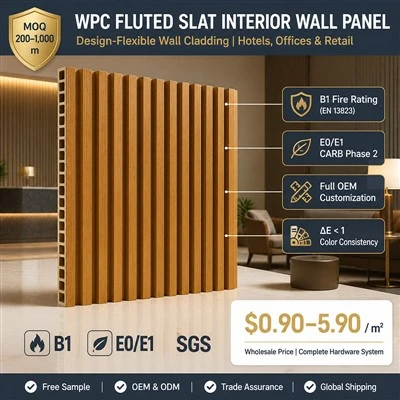
When it comes to enhancing the aesthetic appeal and functionality of interior and exterior spaces, wall panels are an excellent choice. Among the various options available in the market, WPC (Wood - Plastic Composite) and PVC (Polyvinyl Chloride) wood slat wall panels are two popular contenders. As a WPC Wood Slat Wall Panel supplier, I've had the opportunity to see firsthand the unique features and differences between these two materials. In this blog, I'll delve into the key disparities, helping you make an informed decision for your next project.
Composition and Manufacturing
WPC wood slat wall panels are crafted by combining wood fibers or flour with thermoplastics, such as polyethylene or polypropylene, along with various additives. The manufacturing process involves mixing these components under high heat and pressure, resulting in a product that combines the natural beauty of wood with the durability of plastic. This blend offers a good balance between aesthetics and performance. Wpc Panels Outdoor are a great example of where the flexibility of this composition shines, as they can withstand the rigors of outdoor environments while maintaining their appearance.
On the other hand, PVC wood slat wall panels are made primarily from PVC resin, a synthetic plastic polymer. This material is often mixed with additives for color, UV resistance, and impact strength. The manufacturing process for PVC panels typically includes extrusion, where the molten PVC mixture is forced through a die to create the desired slat shape. PVC panels are known for their high flexibility and the ability to be easily molded into various designs.
Appearance
One of the first things people notice about wall panels is their appearance. WPC wood slat wall panels have a natural, wood - like look and feel. The wood fibers in the composite give the panels a warm, organic texture that can mimic the appearance of real wood slats. This makes them an ideal choice for those who want to create a rustic or natural ambiance in their space, whether it's a cozy indoor living area or an outdoor patio. The color options for WPC panels are also quite extensive, with realistic wood grain effects and custom color options available. Exterior Wpc Wall Panel can add a touch of elegance to the exterior of any building, blending seamlessly with the surrounding environment.
PVC wood slat wall panels, while they can also be designed to look like wood, often have a more uniform and synthetic appearance. The extrusion process allows for precise control over the shape and texture, but it can also result in a less organic look compared to WPC panels. However, PVC panels offer a wider range of color and design options, including bright and bold colors that may not be as easily achievable with natural wood - based materials. Some PVC panels even come in 3D designs, adding a unique and modern touch to any space. Check out WPC 3D Panel for some innovative and eye - catching options.
Durability and Maintenance
Durability is a crucial factor when choosing wall panels, especially for outdoor applications. WPC wood slat wall panels are highly durable and resistant to rot, decay, and insect damage. The plastic component in the composite acts as a barrier, protecting the wood fibers from moisture and pests. Additionally, WPC panels are designed to withstand temperature fluctuations and harsh weather conditions, making them a great choice for Wpc Panels Outdoor. Maintenance of WPC panels is relatively easy; a simple cleaning with mild soap and water is usually sufficient to keep them looking their best.


PVC wood slat wall panels are also known for their durability. They are extremely resistant to moisture, making them suitable for areas with high humidity or frequent exposure to water, such as bathrooms and kitchens. PVC panels are also fade - resistant, meaning they will maintain their color and appearance over time, even when exposed to sunlight. However, PVC panels can become brittle in extremely cold temperatures, which may lead to cracking or damage. Maintenance of PVC panels is straightforward, similar to WPC panels, requiring only occasional cleaning.
Environmental Impact
In today's eco - conscious world, the environmental impact of building materials is an important consideration. WPC wood slat wall panels are generally considered to be a more environmentally friendly option. The use of wood fibers in the composite helps to reduce the demand for virgin wood, making it a more sustainable choice. Additionally, many WPC products are made from recycled plastic, further reducing their environmental footprint. Some WPC panels are even biodegradable, which is a significant advantage for those looking to minimize their impact on the environment.
PVC wood slat wall panels, on the other hand, are made from a synthetic plastic polymer, which is derived from non - renewable fossil fuels. The production of PVC also involves the use of chemicals, some of which can be harmful to the environment. However, advancements in technology have led to the development of more eco - friendly PVC products, such as those with reduced chlorine content and improved recyclability.
Cost
Cost is often a determining factor when choosing between WPC and PVC wood slat wall panels. WPC panels tend to be more expensive than PVC panels. The higher cost of WPC is due to the use of wood fibers and the more complex manufacturing process. However, the durability and natural appearance of WPC panels may justify the higher price for some customers, especially for long - term projects or high - end applications.
PVC panels are generally more affordable, making them a popular choice for budget - conscious projects. The lower cost, combined with their durability and ease of installation, makes PVC an attractive option for many homeowners and contractors.
Installation
Installing wall panels is an important step in any project, and the ease of installation can vary between WPC and PVC wood slat wall panels. WPC panels are relatively easy to install, thanks to their lightweight nature and the availability of various installation systems, such as tongue - and - groove or click - together designs. These systems allow for quick and efficient installation, reducing labor costs and installation time.
PVC panels are also easy to install, with many panels featuring a snap - together or interlocking design. This makes them a popular choice for DIY projects, as they can be installed with basic tools and minimal experience. However, PVC panels are more flexible than WPC panels, which may require additional support during installation to prevent sagging or warping.
Conclusion
In conclusion, both WPC and PVC wood slat wall panels have their own unique advantages and disadvantages. WPC panels offer a natural, wood - like appearance, high durability, and a more environmentally friendly option, but they come at a higher cost. PVC panels, on the other hand, are more affordable, easy to install, and highly moisture - resistant, but may have a more synthetic appearance and some temperature - related limitations.
As a WPC Wood Slat Wall Panel supplier, I believe that WPC panels are an excellent choice for those who value the natural beauty of wood and the long - term durability of a composite material. Whether you're looking to enhance the interior of your home or add a touch of elegance to the exterior, Wpc Panels Outdoor or Exterior Wpc Wall Panel can provide the perfect solution. If you're interested in exploring our range of WPC wood slat wall panels or have any questions about the difference between WPC and PVC, please feel free to contact us for a detailed discussion. We're here to help you make the best choice for your project.
References
- Smith, John. "Guide to Wall Panels." Building Materials Magazine. 2022.
- Doe, Jane. "Comparing WPC and PVC in Construction." Construction Today. 2021.
- Green, Tom. "Sustainable Building Materials." Environmental Building Journal. 2020.