


Terracotta Clay Facade Panel & Baguette - Fired Natural-Clay Rainscreen and Sun-Shading System for Architectural Facades

Terracotta Clay Facade Panel & Baguette - The Professional Choice for Facade Contractors, Curtain-Wall Engineers & Design Architects
Terracotta Clay Facade Panel & Baguette is a fired natural-clay facade system produced by high-pressure vacuum extrusion of selected clay followed by high-temperature firing. It covers three product families in one system: solid terracotta cladding panels, deep-section rainscreen panels and terracotta baguettes (louvers) for sun-shading and privacy screening. Because the colour comes from the fired clay body rather than a coating, it does not fade under UV exposure. The system is engineered for facade contractors, curtain-wall engineers, architects and facade consultants who need a ventilated rainscreen with long-format panels, bespoke profiles and a mineral, non-combustible body.
Terracotta is the one cladding family whose appearance is settled in a kiln rather than in a coating line. A panel that leaves the kiln in the right colour cannot fade to a different one , because there is no film to break down and no pigment carrier to chalk away.
That single property decides the maintenance plan for the next several decades. Every other finish on a facade - powder coat, PVDF, painted render - will eventually need access, scaffolding and repainting. Fired clay will not, and the building owner does not have to fund a recoating cycle that nobody priced at handover.
The second half of the system is the baguette. Extruded as a hollow rectangular section and fired the same way, a baguette stack screens direct sun while letting daylight and air pass, giving a shading solution with no blinds, no actuators and no maintenance regime. Horizontal and vertical arrays can be combined, and the profiles can be curved or twisted for a specific elevation.
Behind both families is a dry-hung ventilated rainscreen: brackets carry the profiles, an open joint handles drainage, and a cavity keeps the weather off the substrate while it breathes. Panels run to 3,800mm in length, which pulls the joint count down on a long elevation. The system is fired and finished in China for Hangzhou Feihuang Industry Co., Ltd.'s naturwing export range.

Key Product Specifications
|
B2B Parameter |
Data |
|
Primary Buyer Types |
Facade & Curtain-Wall Contractors, Architects & Facade Consultants, Public & Commercial Developers, Building-Material Distributors |
|
Key Export Markets |
North America, Western Europe, Middle East, Southeast Asia, Australia |
|
Material & Process |
Natural clay, high-pressure vacuum extrusion, high-temperature kiln firing |
|
Solid Terracotta Panel |
Thickness 10–15mm; length 100–3,800mm; height max. 600mm; ≈21.5 kg/m² at 10mm |
|
Terracotta Rainscreen Panel |
Thickness 15–100mm; length up to 3,800mm; height max. 900mm; ≈50 kg/m² at 30mm |
|
Terracotta Baguette / Louver |
Min. section 43 × 43mm; length max. 1,800mm; height max. 100mm; width max. 200mm |
|
Colours |
Natural fired white, yellow, brown, red, grey; glazed coloured ranges available |
|
Textures & Finishes |
Natural, sandblasted, honed, stripped, wood texture, wavy, micro-graving, 3D ink-jet printing |
|
Key Performance |
Non-fading UV-stable colour, fire resistant, low radiation, no pollution, CE-tested performance |
|
Systems |
Open-joint ventilated rainscreen (dry-hung); baguette sun-shading screens; stick and unitised facade systems |
|
MOQ |
50–500 m² depending on profile |
|
Reference Price Band |
≈US$4.96–26 per m²-equivalent for panel and louvre profiles (supplier listings surveyed; profile drives the band) |
|
Packing |
Palletised, edge-protected export packing |
|
Delivery |
20–40 days depending on profile and firing batch |
Why Facade Teams Specify Terracotta Systems
1. Fired-Clay Colour : No Fading, No Coating Lifecycle
The colour is developed in the clay body during firing and holds its anti-UV capability, so the facade does not need recoating or repainting over its life.
Key Benefits:
Colour produced in the kiln : the tone is the material, not a layer sitting on top of it
No fading under exposure : decades of sunlight leave the elevation as fired
No access costs to budget for : the recoating cycle that scaffolding implies never starts
Patina rather than decay : weathering reads as age, not as a failing finish
Sample to delivery : the fired tone is repeatable across later production batches
Why this matters to B2B buyers: Recoating a facade requires scaffolding and building access years after handover - a colour-fast material removes that recurring liability from the client's asset plan.

2. Ventilated Rainscreen : Drainage, Thermal Break and Moisture Control
Deep-section panels and open-joint dry-hung systems manage rainwater at the cladding plane and keep a ventilated cavity behind, protecting the substrate and improving thermal performance.
Key Benefits:
Water is managed at the outer plane : the substrate never becomes the drainage surface
The cavity dries itself : moving air clears condensation instead of trapping it
Thermal break in the assembly : the ventilated gap cuts the bridge through the frame
Open joints designed in : drainage and movement are part of the detail, not a defect
Stick or unitised : the same profiles suit both erection methods
Why this matters to B2B buyers: Rainscreen performance is the technical core of the facade specification, and a system supplier who provides the profiles, fixings and system detail takes the interface risk off the contractor.

3. Baguette Sun-Shading : Controls Light Without Blinds
Terracotta baguettes (louvers) in horizontal or vertical orientation cut direct solar exposure while controlling daylight and ventilation, and can be arranged individually or combined with terracotta panels at corners, parapets, roofs and balconies.
Key Benefits:
Shading with no moving parts : nothing to service, align or motorise
Orientation as a design decision : rotation and spacing tune the shading angle
Daylight and airflow preserved : the room darkens less than it would behind a blind
Curved and twisted profiles : the screen can follow a curved plan rather than being segmented
Shading and cladding in one language : the louvres and the panels are the same fired material
Why this matters to B2B buyers: Sun-shading is written into energy-compliance submissions - a fixed shading system satisfies the requirement without adding maintenance to the building's operation.

4. Non-Combustible Mineral Body
Fired clay is inherently non-combustible and carries low radiation and no pollution, making it suitable for high-rise and public buildings.
Key Benefits:
Mineral body, mineral risk : the cladding adds no combustible material to the elevation
No fire-retardant additives : the property comes from a kiln, not a chemical treatment
CE-tested performance : test evidence supports the submittal rather than a claim
Low radiation and no pollution : relevant on public and healthcare procurement criteria
Tall buildings stay reachable : the design is not boxed in by a combustibility limit
Why this matters to B2B buyers: On high-rise and public projects, the combustibility of the cladding assembly is the highest-consequence decision - a mineral system keeps the design competitive at the compliance gate.

5. 3,800mm Long Format and Bespoke Profiles
Panels up to 3,800mm long reduce joint count on large elevations, and the factory supports custom shapes, dimensions, colours and surface textures including curved and twisted baguettes.
|
Certification |
Market / Standard |
Value for B2B Buyers |
|
CE-tested performance |
European Union |
Test evidence behind the submittal rather than a supplier claim |
|
Non-combustible mineral body |
Global |
Fired clay adds no combustible material to the elevation |
|
UV-stable fired colour |
Global |
Colour originates in the clay body, so no recoating cycle follows |
|
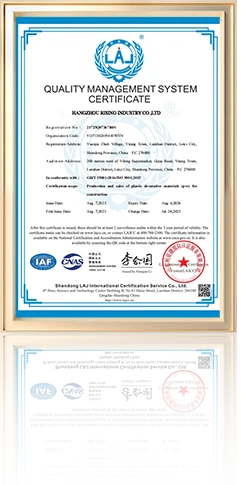
ISO 9001 |
Worldwide |
Certification held on the extrusion and kiln lines |
|
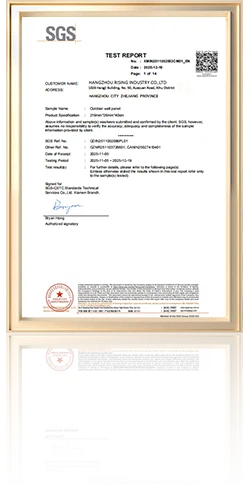
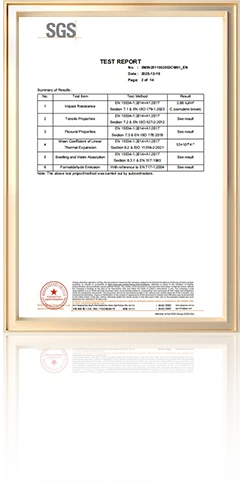
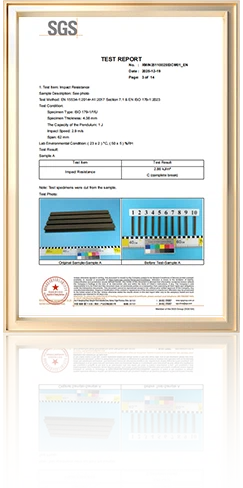
SGS third-party testing |
Worldwide |
Independent test reports on the facade file |
Key Benefits:
Long panels, fewer joints : 3,800mm sections pull the horizontal joint count down
Extrusion dies made to the drawing : a bespoke section is tooled rather than approximated
Texture developed with the architect : sandblasted, honed, stripped, wood or ink-jet surfaces
Glazed ranges available : a coloured glaze where the natural fired palette is not enough
Shapes the catalogue cannot supply : curved and twisted baguettes made to order
Why this matters to B2B buyers: Architectural facades are won on a detail the standard catalogue cannot deliver - bespoke profile capability is what converts a specifier relationship into a project award.
Pain Points
|
Pain Point |
How naturwing Solves It |
|
A coated or painted facade creates a future access cost |
Fired colour means no recoating programme is ever funded |
|
The shading strategy needs power and servicing |
Baguette screens are fixed profiles with nothing to drive |
|
Standard lengths multiply joints on long elevations |
3,800mm panels are extruded and fired to length |
|
The elevation calls for a profile not in any catalogue |
Dies are made to the drawing, including curved and twisted baguettes |
|
Combustibility limits how tall the design can go |
Clay is inherently mineral and non-combustible |
|
Interface risk sits with the contractor |
Profiles, brackets and system detail come from one supplier |
Application Scenarios

Residential
Private villa elevations, gated-community entrance features, roof terraces and garden screens

Commercial
Office and hotel facades, retail envelopes, restaurant terraces, headquarters elevations

Public Spaces
Civic and cultural buildings, museums, transit station envelopes, hospital and campus facades

Landscape Architecture
Sun-shading canopies, pergola screens, carpark louvres, bridge and underpass cladding

Multi-Family
Apartment tower elevations, balcony screening arrays, podium facades, boundary wall systems
Installation Guide

Product Comparison: Terracotta vs Aluminium & Fibre Cement Rainscreen
|
Feature |
Aluminium Cassette Rainscreen |
Fibre Cement Rainscreen |
Terracotta Clay System (naturwing) |
|
Colour Origin |
Applied coating |
Applied coating or through-body pigment |
Developed in the clay during firing |
|
Shading Capability |
Louvre cassettes are possible |
Limited to flat profiles |
Baguette louvres as a dedicated family |
|
Cavity & Drainage |
Standard open-joint system |
Standard open-joint system |
Open-joint dry-hung with adjustable brackets |
|
Panel Length |
Roll-formed lengths differ by supplier |
Often shorter than 3,000mm |
Up to 3,800mm |
|
Profile Freedom |
Extrusion limits the section |
Flat sheet only |
Dies made to the drawing, curved and twisted |
|
Combustibility |
Non-combustible metal |
Non-combustible mineral |
Non-combustible mineral |
|
Surface Options |
Powder coat and PVDF ranges |
Painted or raw finish |
Natural, sandblasted, honed, stripped, wood, 3D ink-jet |
|
Fixing System |
Cassette hooks on a carrier |
Rails with visible or concealed fixings |
Bracket-and-rail dry-hung, stick or unitised |
|
Lifecycle Cost |
Coatings age and need renewal |
Painted faces need renewal |
No recoating cycle to fund |
Company Strength

The clay profiles are extruded, cut and fired for Hangzhou Feihuang Industry Co., Ltd. in China, and reach facade contractors through the naturwing export range. Clay selection, vacuum extrusion, drying, kiln firing and finishing are handled in sequence at one operation, which is what allows a 3,800mm section and a bespoke louvre profile to be produced to the same fired tone.
Our Manufacturing Capabilities:
Clay body blended and aged before extrusion
Vacuum extrusion to standard and to project-specific dies
Controlled drying ahead of the kiln, which is what prevents a long panel from bowing
High-temperature firing with batch records retained per kiln load
Sandblasting, honing, stripping, wood texture and 3D ink-jet finishing on site
Bracket, rail and baguette support hardware supplied with the profiles
Quality Assurance:
Fired tone is held against a retained control sample
Length and section measured on panels taken off the kiln car
Squareness checked before long-format panels are packed
Palletised loads are edge-protected and braced for ocean freight
Glazed and natural ranges are packed on separate pallets
Profile and firing batch recorded on the consignment documents
Ready to Order naturwing Terracotta Facade Panels & Baguettes for Your Project?
Give us the elevation, the shading requirement and the profile you have in mind, and we will confirm the section, the fired tone and the bracket layout before the kiln batch is scheduled.
Contact us today for:
Fired clay samples in the tone you are considering
Pricing by profile family and by cavity system
Bespoke die development for a project-specific section
Bracket, rail and baguette support layout from your elevation
CE test evidence and system documentation for the facade file

Our Certificates

FAQ
Q: What volume do you sell in?
A: Between 50 and 500 m², depending on which profile family you are taking. The figure is set by the extrusion and kiln batch rather than by a fixed minimum.
Q: What is the longest panel you produce?
A: 3,800mm. Long-format panels are the reason the joint count on a large elevation can be held down, and they are fired that way rather than being joined afterwards.
Q: What is the difference between the panel families?
A: Solid panels run 10–15mm thick for straightforward cladding, deep rainscreen panels run 15–100mm where the section does structural work in the elevation, and baguettes are hollow louvre profiles from 43×43mm.
Q: Does the colour fade?
A: No. Colour is produced inside the clay during firing rather than applied as a coating, so there is no film to break down under UV and no repainting cycle to fund.
Q: Can the baguettes be curved or twisted?
A: Yes, provided the geometry is workable in a fired profile. Send the elevation and we will confirm what can be extruded and fired for that section.
Q: Is the system suitable for high-rise work?
A: Fired clay is non-combustible, carries low radiation and adds no combustible material to the assembly, which keeps it available on tall and public buildings.
Q: What surface finishes are offered?
A: Natural, sandblasted, honed, stripped, wood texture, wavy, micro-graving and 3D ink-jet printing, with glazed coloured ranges where the natural fired palette is not enough.
Q: Do you supply the fixing system?
A: Brackets, carrier rails and baguette supports are supplied with the profiles, so the cavity depth, joint width and system detail come from one source rather than from three.
Q: What is the lead time?
A: 20–40 days, set by the profile and the firing batch. Bespoke dies add tooling time before the first production run.
Hot Tags: terracotta clay facade panel & baguette, China terracotta clay facade panel & baguette manufacturers, suppliers, factory


