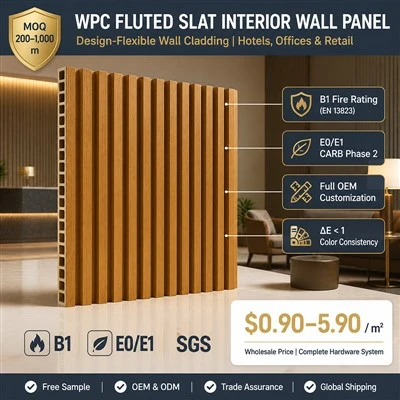
When it comes to outdoor construction and decoration, durability and resistance to various environmental factors are of utmost importance. One material that has gained significant popularity in recent years is WPC (Wood - Plastic Composite) wall panels. As a supplier of WPC wall panels for outdoor use, I often get asked the question: "Are WPC wall panels frost - resistant outdoors?" In this blog, I'll delve into the science behind WPC wall panels and their frost resistance, as well as provide insights for potential buyers.
Understanding WPC Wall Panels
WPC wall panels are a blend of wood fibers and thermoplastics, typically polyethylene (PE), polypropylene (PP), or polyvinyl chloride (PVC). This combination brings together the best of both worlds: the natural aesthetic of wood and the durability and low - maintenance characteristics of plastic. The manufacturing process involves compounding the wood fibers and plastic polymers under heat and pressure, resulting in a homogenous material with unique properties.


Frost Resistance Mechanisms
-
Material Composition
The plastic component in WPC wall panels plays a crucial role in frost resistance. Plastics generally have good low - temperature properties. They can withstand freezing temperatures without significant brittleness or cracking. For example, polyethylene has a relatively low glass transition temperature, which means it remains flexible even in cold conditions. The wood fibers, on the other hand, are embedded in the plastic matrix, which helps to distribute stress evenly across the panel. This reduces the risk of the panel splitting or warping due to frost. -
Water Resistance
Frost damage often occurs when water penetrates a material, freezes, and then expands. WPC wall panels have inherent water - resistant properties because of the plastic content. The plastic forms a barrier that prevents water from seeping into the panel. This is in contrast to traditional wood panels, which can absorb water and are more prone to frost - related damage such as swelling, cracking, and rotting. -
Structural Integrity
WPC wall panels are engineered to have a consistent and stable structure. During the manufacturing process, the wood fibers and plastic are well - mixed and formed into a dense panel. This structure helps the panel maintain its shape and integrity in cold weather. The cross - linking and bonding between the wood fibers and plastic molecules contribute to the overall strength of the panel, making it more resistant to the forces exerted by freezing and thawing cycles.
Testing and Real - World Performance
- Laboratory Testing
Many WPC wall panel manufacturers conduct rigorous laboratory tests to evaluate frost resistance. These tests typically involve subjecting the panels to repeated freeze - thaw cycles. The panels are placed in a controlled environment where the temperature is cycled between freezing and above - freezing temperatures. After a certain number of cycles, the panels are inspected for signs of damage such as cracks, delamination, or loss of strength. High - quality WPC wall panels can withstand dozens of freeze - thaw cycles without significant degradation. - Real - World Applications
In real - world scenarios, WPC wall panels have been used in cold climate regions with great success. For example, in northern Europe and Canada, where winters can be extremely cold, WPC wall panels are used for exterior cladding on buildings. These panels have proven to be durable and reliable, maintaining their appearance and functionality over time. Homeowners and commercial property owners have reported that WPC wall panels require minimal maintenance even in frosty conditions.
Factors Affecting Frost Resistance
- Quality of Manufacturing
The quality of the manufacturing process has a significant impact on the frost resistance of WPC wall panels. Panels that are poorly manufactured may have uneven distribution of wood fibers and plastic, or they may have voids or weak spots. These defects can reduce the panel's ability to withstand frost. As a supplier, we ensure that our WPC Board Partition and Wpc Slat Wall Panel are produced using high - quality materials and strict manufacturing standards to guarantee optimal frost resistance. - Installation
Proper installation is also crucial for frost resistance. If the panels are not installed correctly, there may be gaps or improper sealing, which can allow water to penetrate. This can lead to frost damage over time. It is important to follow the manufacturer's installation instructions carefully. For example, leaving appropriate expansion joints between panels can accommodate the natural expansion and contraction that occurs with temperature changes. - Environmental Conditions
The severity of the frost and the length of the cold season can affect the performance of WPC wall panels. In areas with extremely long and cold winters, the panels may be subjected to more stress. However, as long as the panels are of high quality and installed correctly, they can still perform well. Additionally, exposure to other environmental factors such as snow, ice, and wind can also impact the panels. For instance, heavy snow loads can put pressure on the panels, and strong winds can cause abrasion.
Comparing WPC Wall Panels with Other Materials
- Traditional Wood Panels
As mentioned earlier, traditional wood panels are more susceptible to frost damage compared to WPC wall panels. Wood absorbs water easily, and when the water freezes, it can cause the wood to split or warp. Wood also requires regular maintenance such as painting or staining to protect it from the elements. In contrast, WPC wall panels are low - maintenance and have better frost resistance. - Vinyl Panels
Vinyl panels are also a popular choice for outdoor use. While they have good water resistance, they may not have the same natural aesthetic as WPC wall panels. WPC panels offer the look and feel of wood, which is often preferred for many outdoor applications. In terms of frost resistance, both materials can perform well, but WPC panels may have an edge in terms of strength and durability due to the presence of wood fibers. - Concrete Panels
Concrete panels are very heavy and may require more complex installation. They can also be prone to cracking in cold weather if not properly designed. WPC wall panels are lighter, easier to install, and have better frost resistance in many cases.
Conclusion
In conclusion, WPC wall panels are generally frost - resistant outdoors. Their unique material composition, water - resistant properties, and stable structure make them suitable for use in cold climates. However, the frost resistance can be affected by factors such as manufacturing quality, installation, and environmental conditions. As a supplier of Deck Wpc and other WPC wall panel products, we are committed to providing high - quality panels that can withstand the challenges of outdoor use, including frost.
If you are considering using WPC wall panels for your outdoor project, whether it's for a residential home or a commercial building, we invite you to contact us for more information. We can provide detailed product specifications, samples, and advice on installation. Our team of experts is ready to assist you in making the right choice for your project.
References
- ASTM International. (20XX). Standard test methods for evaluating the performance of wood - plastic composites.
- Smith, J. (20XX). Outdoor building materials: A comparative study. Journal of Building Materials, 15(2), 123 - 135.
- Johnson, R. (20XX). Frost resistance of composite materials. Materials Science Review, 20(3), 45 - 58.